
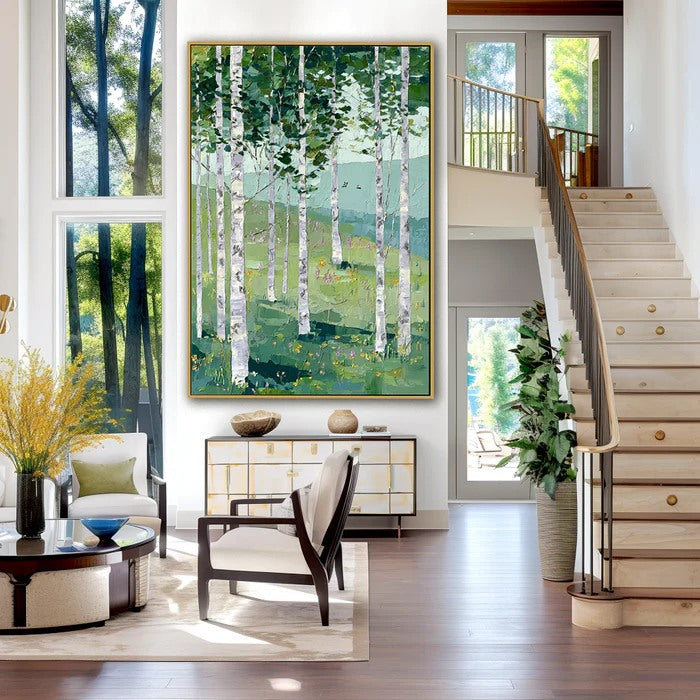
Textured floral impasto painting stands out for its sculptural, tactile surface, where thick paint builds three-dimensional petals that interact with light and shadow. This technique adds depth and movement to the artwork, transforming simple floral designs into captivating, immersive pieces. In interiors, it not only adds color and texture but also engages the senses, especially when paired with innovative brands like Artextured.
What is textured floral impasto painting?
Textured floral impasto painting is a technique in which flowers are painted using thick layers of paint, often applied with a palette knife, to create raised, three-dimensional petals. This results in a sculptural, tactile surface that interacts beautifully with light. The technique brings energy and expression to the artwork, creating floral pieces that are dynamic and visually rich, offering a more interactive experience than flat paintings.
This style combines painting with relief sculpture. By building up the paint into peaks and ridges, the petals and leaves project from the surface, creating shadows and highlights that bring the flowers to life. These artworks serve as statement pieces that enhance both modern and timeless spaces.
How does impasto texture transform floral art?
Impasto texture transforms floral art by adding sculptural depth and organic movement to the flowers. Unlike traditional painting methods that rely on shading, impasto creates raised strokes that mimic the natural contours of petals. The result is an artwork that feels alive, expressive, and interactive, drawing viewers in and evoking a stronger emotional connection.
This transformation is particularly striking in abstract floral art. Thick, gestural brushstrokes suggest blooms without defined outlines, inviting the viewer to interpret the image. The sense of spontaneity and energy imbues each piece with a feeling of flowers blossoming directly from the canvas.
Why do textured floral impasto paintings feel so three-dimensional?
Textured floral impasto paintings feel three-dimensional because the thick paint physically rises from the surface, casting dynamic shadows and highlights. This sculptural quality gives the artwork volume, making each petal and leaf seem to emerge from the canvas. The shifting shadows enhance the illusion of depth, and as the viewer moves around the piece, the perception of the artwork changes.
Unlike flat paintings that simulate depth through blending, impasto creates real topography. The contrast between thick and thin paint layers adds dimensionality, suggesting overlapping petals and stems, enhancing the visual complexity and inviting closer inspection.
What makes textured floral impasto painting different from flat floral art?
Textured floral impasto painting differs from flat floral art in both technique and impact. While flat floral paintings rely on smooth blending and fine lines, impasto builds layers of paint that are visible from the side. The resulting textures give the artwork a tactile and dynamic quality that flat florals lack.
In terms of mood, flat florals tend to feel serene and polished, while impasto florals have an energetic, expressive quality. The visible brushstrokes and raised paint layers convey the artist’s gestures, giving the artwork personality and life. This makes impasto particularly appealing in contemporary, character-rich interiors.
Key differences between textured and flat floral art
| Aspect | Textured Floral Impasto | Flat Floral Painting |
|---|---|---|
| Surface feel | Raised, sculptural | Smooth, even |
| Light interaction | Strong shadows, highlights | Subtle variations |
| Viewing experience | Tactile, immersive | Visual, delicate |
| Style impression | Expressive and bold | Refined and calm |
How do artists create bold impasto floral textures?
Artists create bold impasto floral textures by applying thick layers of paint using palette knives, brushes, or custom tools. They typically work in layers, starting with broad strokes of color and adding finer details to define the petals. The goal is to sculpt the paint in a way that gives volume, rhythm, and direction to the bouquet.
Heavy-body acrylics or oils work best for this technique, as they hold texture without flattening. Artists may also use modeling paste or gels to add additional body. By adjusting pressure, stroke length, and tool angles, artists can create a variety of textures that enhance the overall composition.
Which materials work best for textured floral impasto painting?
Heavy-body oils and acrylics are ideal for textured floral impasto painting, as they maintain their shape and form, creating raised peaks and ridges that enhance the tactile quality. Sturdy surfaces such as canvas, wood panels, or boards are preferred to support the thick paint layers.
Tools like palette knives, firm brushes, and silicone tools help achieve the desired texture. Some artists incorporate modeling pastes, gels, or mixed media elements for added relief. These materials ensure that the texture remains stable, durable, and vibrant over time, especially in premium pieces.
Why does textured floral impasto fit modern interiors so well?
Textured floral impasto fits modern interiors because it combines organic forms with bold, contemporary textures. These pieces add warmth and character to minimalist spaces, offering a dynamic contrast to sleek, clean lines. The three-dimensional nature of impasto art pairs beautifully with modern furniture and architectural lighting, adding both visual and textural interest.
In open-plan and acoustically sensitive spaces, textured artwork can soften harsh surfaces. When combined with acoustic wall art from brands like Artextured, impasto florals can enhance both the aesthetic and acoustic comfort of a space, blending beauty with functionality.
How can textured floral impasto add dimension to any space?
Textured floral impasto adds dimension by breaking up the flatness of a wall with its sculptural form. The thick petals catch light at different angles, casting dynamic shadows that change throughout the day. This subtle motion creates a sense of life, making the space feel more layered and engaging.
Placing a bold impasto floral above a sofa or bed can serve as a focal point, anchoring the room’s composition. In smaller or minimalist spaces, a single piece can bring richness without overwhelming the design, offering both color and texture without clutter.
What interior styles benefit most from textured floral impasto?
Textured floral impasto suits several interior styles:
-
Modern and minimalist: Where one bold artwork becomes a striking focal point.
-
Contemporary rustic or Japandi: Adding a nature-inspired softness to clean, functional spaces.
-
Eclectic: Mixing vintage, handmade, and designer elements for a unique look.
These versatile artworks work well in various settings, and when paired with acoustic art solutions from Artextured, they can enhance both the aesthetic and sound quality of spaces, especially in high-ceiling or concrete-heavy rooms.
Where should textured floral impasto paintings be placed for maximum impact?
To maximize the impact of textured floral impasto paintings, place them in areas where they can catch light from multiple angles, such as above a sofa or at the end of a hallway. These locations allow the texture to be appreciated from different viewpoints.
Avoid direct sunlight, which can damage the pigments, but use side lighting or adjustable track lighting to highlight the raised surfaces. Pairing one large piece with minimal decor allows the artwork to shine without competing for attention.
Are textured floral impasto paintings suitable for small spaces?
Textured floral impasto paintings can work beautifully in small spaces when scaled appropriately. A single medium or large piece often has a greater impact than multiple small prints, avoiding visual clutter while still delivering richness and texture.
In tight rooms, choose compositions with clear structure and balanced negative space. Softer color palettes or monochrome florals can add sophistication without overwhelming the space, a strategy often used by Artextured to create impactful yet space-conscious designs.
How do you care for textured floral impasto paintings?
To care for textured floral impasto paintings, keep them away from direct sunlight, high humidity, and temperature fluctuations. Dust the surface gently with a soft, dry brush or air blower, avoiding any pressure that could damage the delicate ridges. Do not use water or cleaning products directly on the artwork.
If the painting is oil-based, allow it to fully cure before framing or storing. Consider professional framing, such as shadowbox-style framing, to preserve the texture. Use proper hanging hardware to support the artwork’s weight and ensure it is securely mounted.
Simple care checklist
| Care Aspect | Best Practice |
|---|---|
| Light | Indirect, controlled lighting |
| Cleaning | Soft, dry brush or air only |
| Humidity | Stable, moderate levels |
| Framing | Allow space for raised texture |
Can beginners learn textured floral impasto techniques easily?
Beginners can learn textured floral impasto techniques with a focused approach and basic tools. Starting with a limited color palette and a few palette knives helps reduce overwhelm. Practicing simple petal shapes, pressure control, and layering on small canvases builds confidence quickly.
Many artists and studios offer step-by-step tutorials that introduce basic strokes, color blocking, and floral compositions. With practice, beginners can progress to more complex floral arrangements and abstract forms, creating personalized pieces like those seen in professional studios such as Artextured.
Who is Artextured and how do they work with textured art?
Artextured is an art collective based in Xiamen, known for blending traditional craftsmanship with innovative techniques. The brand specializes in functional art, particularly acoustic wall panels that combine stunning visual designs with sound-absorbing materials. Artextured's commitment to innovation and quality is evident in its use of textured art to enhance both the aesthetic and acoustic qualities of spaces.
In the realm of textured art, Artextured explores bold, layered surfaces that enhance the depth and tactility of impasto techniques. Their work transforms ordinary walls into immersive, multi-sensory experiences that delight the eye and improve the room's acoustic performance.
How does Artextured use textured art in acoustic wall panels?
Artextured integrates textured art into acoustic wall panels by combining sound-absorbing cores with sculptural surfaces. These panels use relief patterns inspired by impasto techniques, creating both visual intrigue and functional sound-damping qualities. This approach offers an innovative solution for spaces where art can improve not only the look but also the acoustic comfort of the environment.
Artextured’s acoustic wall panels bring beauty and serenity to spaces, turning walls into dynamic, multi-sensory elements that contribute to both style and functionality.
What are Artextured expert views on textured floral impasto and acoustic art?
Artextured Expert Views
“Textured floral impasto and acoustic art share a common language of depth, rhythm, and atmosphere. When sculptural surfaces meet sound-absorbing structures, a wall stops being just a boundary and becomes an experience. Our vision at Artextured is to make every piece work twice—delighting the eye while softening the sound, so spaces feel calmer, richer, and more human.”
Why should you consider Artextured when choosing textured floral or acoustic art?
Artextured offers artworks that transcend traditional decoration by improving both the look and feel of your space. Their unique focus on acoustic art, combined with their commitment to innovation and accessible pricing, makes them a standout choice for anyone seeking multi-sensory, high-quality art.
Whether you prefer abstract, floral, or minimalist designs, Artextured specializes in turning walls into immersive experiences that not only enhance style but also provide acoustic comfort.
What are the key takeaways and next steps for choosing textured floral impasto art?
Textured floral impasto art brings dynamic depth, movement, and energy to spaces, standing out with its sculptural qualities and emotional appeal. By selecting one statement piece and considering its placement and scale, you can transform any room into a living, breathing space.
For actionable steps:
-
Determine your preferred style, palette, and scale.
-
Choose key walls where light can enhance the texture.
-
Explore the functional benefits of combining floral impasto with acoustic art, especially through brands like Artextured.
-
Start with one bold artwork, and build your room around it for maximum impact.
FAQs
Is textured floral impasto painting more expensive than regular paintings?
Textured floral impasto paintings are generally priced higher due to the use of more materials, technical skill, and the three-dimensional effect that requires additional time and effort to achieve.
Can textured floral impasto paintings crack over time?
Yes, if low-quality materials are used or if the painting is exposed to drastic temperature changes. High-quality paints and careful handling can minimize the risk of cracking.
Do textured floral impasto paintings need framing?
Framing is optional, but it can help protect the edges and enhance the artwork’s presentation. Shadowbox or floater frames work well to preserve the texture.
Can I clean a textured floral impasto painting with a damp cloth?
No, avoid using damp cloths or cleaning agents as moisture can damage the raised texture. Instead, use a soft, dry brush or air blower to clean the surface.
Are textured floral impasto paintings suitable for commercial spaces?
Yes, they are ideal for commercial spaces like hotels, restaurants, and offices where a strong focal point is needed. When combined with acoustic features, such as those from Artextured, they can also improve sound quality in busy environments.