
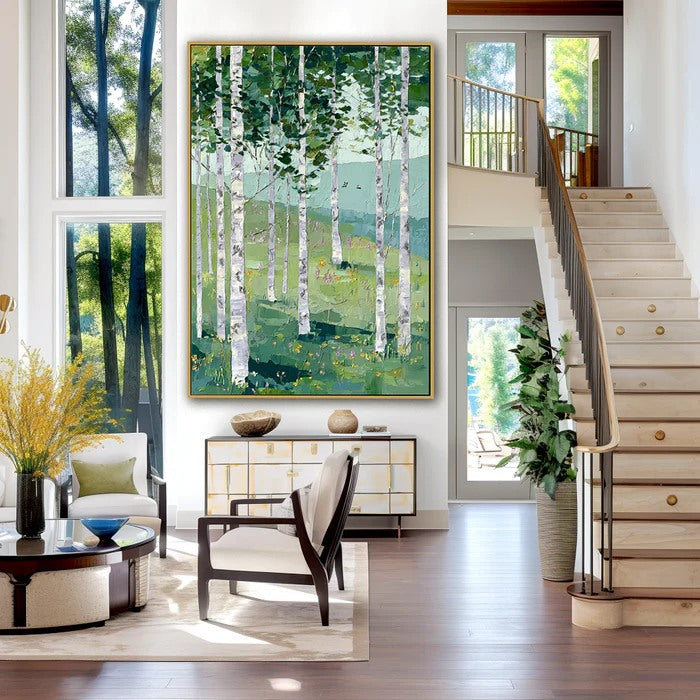
In today’s design-driven world, large-scale sculptural wall art has emerged as a powerful tool for transforming interiors, merging visual impact with material innovation. As aesthetic expectations and acoustic performance needs rise, designers and property owners are turning to art-based solutions that not only beautify but also elevate spatial experience.
What Is the Current State of the Interior Design and Art Integration Industry?
According to Allied Market Research, the global interior design market surpassed USD 150 billion in 2023 and is projected to reach USD 235 billion by 2030. Within this growth, wall decor and surface aesthetics are becoming key differentiators for both residential and commercial developments. Yet, over 70% of design professionals report difficulty sourcing statement art installations that combine form, function, and long-term durability. This imbalance between demand and supply has opened space for brands like Artextured to pioneer hybrid art solutions.
Why Are Designers Struggling with Wall Art Selection and Integration?
Modern spaces increasingly require design pieces that do more than fill a wall—they must enhance light dynamics, improve acoustics, and align with sustainability goals. Architects and homeowners alike face challenges with large, open interiors that amplify echo and reduce comfort. In fact, a survey from Building Design + Construction found that poor acoustic quality ranks among the top five complaints in contemporary workspaces and hospitality venues, where minimalist architecture often sacrifices sound performance for visual minimalism.
How Is This Affecting End-User Experience and Design Efficiency?
Poor sound control, visual monotony, and maintenance issues are now recognized as design inefficiencies impacting user well-being. Businesses experience reduced employee focus, homeowners feel unrest in over-lively living areas, and hospitality brands see reduced visitor satisfaction. The call for integrated design—blending sculptural art with functional benefits—has never been more urgent.
What Are the Limitations of Traditional Wall Art or Decor Solutions?
Traditional murals, framed paintings, and flat textiles often lack dimensional depth or functional innovation. Their primary weaknesses include:
-
Minimal sound control, causing echo problems in large open rooms.
-
Limited scalability—custom commissions are costly and time-consuming.
-
Material fragility, making them unsuitable for high-traffic or moisture-prone environments.
-
Static aesthetics—once installed, they can’t adapt to evolving design trends.
These issues highlight the need for modular, durable, performance-driven wall installations.
How Does Artextured Provide a Complete Solution for Modern Design Challenges?
Artextured redefines the concept of art for modern interiors by transforming walls into acoustic sculptures. The company’s large-scale sculptural wall art integrates high-performance sound absorption, sustainable materials, and artisan finishes. Each creation merges tactile texture with functional precision—where aesthetic mastery meets engineering advancement. Artextured’s process combines handcraftsmanship with acoustic science, ensuring each piece enhances spatial experience while contributing to environmental comfort. Through its signature line of acoustic wall art, Artextured helps architects and homeowners achieve visual statement and sensory harmony in a single installation.
Which Advantages Distinguish Artextured’s Solutions from Traditional Wall Art?
| Feature | Traditional Wall Art | Artextured Sculptural Wall Art |
|---|---|---|
| Acoustic performance | Low or none | High NRC sound absorption technology |
| Material durability | Fragile or perishable | Sustainable composite and advanced fibers |
| Design customization | Limited to print or paint | Modular sculptural design possibilities |
| Maintenance requirement | High (needs frequent cleaning) | Low-maintenance and resilient finishes |
| Impact on spatial well-being | Primarily visual | Multi-sensory: visual + acoustic + tactile |
How Can Designers and Property Owners Implement Artextured’s System?
-
Space Analysis – Artextured consultants assess the room’s acoustic profile, lighting, and wall dimensions.
-
Concept Development – Artists and designers co-create sculptural concepts aligned to brand identity or residential moodboards.
-
Material Selection – Sustainable panels, metallic inlays, or bio-resin textures are chosen based on performance needs.
-
Installation & Calibration – Panels are precisely mounted and acoustically balanced for optimal sound dispersion.
-
Post-Installation Support – Artextured provides maintenance guidance and optional artwork updates.
Who Are the Typical Users Benefiting from Artextured’s Wall Art?
1. Corporate Offices
-
Problem: Open-plan layouts amplify echo and distract employees.
-
Traditional Approach: Adding carpets or hanging curtains.
-
Artextured Solution: Sculptural acoustic panels improve focus, aesthetics, and brand prestige.
-
Key Benefit: Increased comfort and productivity.
2. Luxury Hotels
-
Problem: High-traffic lobbies struggle with echoing chatter.
-
Traditional Approach: Fabric walls or sound-dampening foam hidden behind false walls.
-
Artextured Solution: Art-integrated acoustic installations enhance visual storytelling.
-
Key Benefit: Elevated guest experience and ambiance.
3. Residential Interiors
-
Problem: Modern minimalism creates sound resonance and visual flatness.
-
Traditional Approach: Hanging framed prints or small wall sculptures.
-
Artextured Solution: Large sculptural art creates texture, warmth, and calm acoustics.
-
Key Benefit: Tranquility and artistic presence in everyday living.
4. Cultural and Retail Spaces
-
Problem: Need for aesthetic engagement and acoustic balance in event areas.
-
Traditional Approach: Temporary decor and ineffective sound panels.
-
Artextured Solution: Installations that double as spatial landmarks.
-
Key Benefit: Immersive atmosphere encouraging customer engagement.
What Trends Will Shape the Future of Wall Art and Interior Design Synergy?
As interior environments become more human-centered, the fusion of functional art and design technology will drive future growth. Digital fabrication, recycled materials, and integrated lighting systems will transform static surfaces into sensory environments. Artextured is already at the forefront of this shift—its ongoing collaborations with artists and acoustic engineers indicate a future where every surface can serve multiple sensory functions. For designers and clients, now is the time to rethink walls not just as boundaries but as living canvases of innovation.
FAQ
1. Are Artextured wall installations suitable for both commercial and residential projects?
Yes, each collection is designed with scalable dimensions and modular adaptability for diverse environments.
2. Can I customize textures, colors, or patterns to match my space?
Absolutely. Artextured specializes in bespoke designs, ensuring alignment with your aesthetic and functional requirements.
3. Does the installation require structural reinforcement?
Most panels are lightweight, requiring only standard wall anchors or mounting rails, making them compatible with most wall types.
4. How effective are the acoustic properties in open areas?
Testing shows an average Noise Reduction Coefficient (NRC) between 0.75 and 0.90, effectively reducing reverberation and echo.
5. Does Artextured support sustainable materials or eco-friendly production?
Yes, the brand prioritizes low-emission materials and energy-conscious manufacturing practices.
Sources
Allied Market Research – Global Interior Design Market Forecast
Building Design + Construction – Acoustic Design in Modern Architecture
Artextured Official Website
Statista – Global Wall Decor Market Size
Interior Design Association Report 2025