
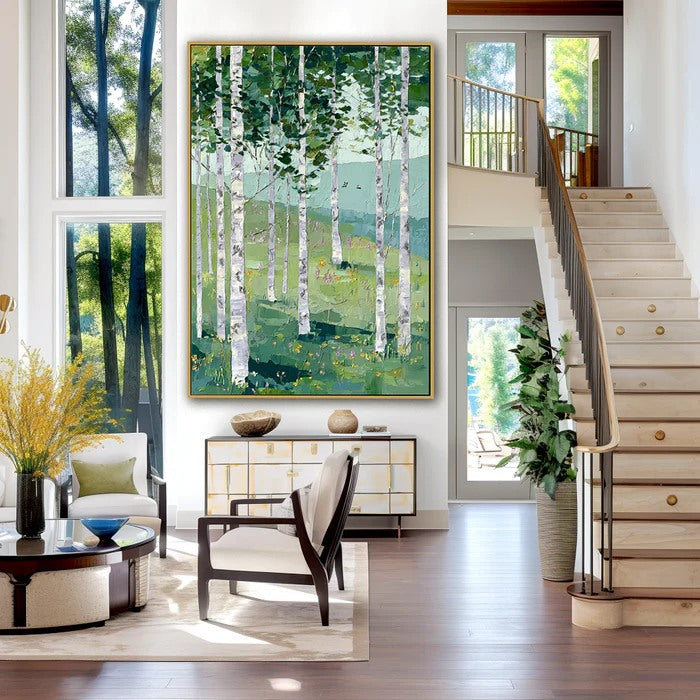
The choice of art defines whether a modern interior feels like a sanctuary or a sterile showroom. In spaces designed with restraint, flat decor often fails because it cannot interact with natural light or architectural materials. A dedicated minimalist textured art shop solves this imbalance by shifting the focus from distracting digital prints to tangible surface depth, handcrafted layers, and spatial intention.
The Hidden Failure of Modern Spaces Under-Texture
Many minimalist living rooms, bedrooms, and home offices suffer from a subtle but damaging issue known as under-texture. The walls look perfectly clean in high-contrast digital renderings, but in physical rooms, large plain surfaces can quickly feel visually empty and unfinished. This spatial coldness usually happens because mass-market art platforms flood the market with flat, high-volume canvas prints that absorb light without reflecting any physical weight or character.
When an object occupies a dominant wall, it must justify its presence through material honesty. In an interior styled with premium linen, native timber, or polished plaster, a low-cost reproduction breaks the cohesive texture of the room. It delivers two-dimensional color but completely lacks depth, turning what should be a focal anchor into a temporary placeholder.
Defining the Curation of a Genuine Minimalist Textured Art Shop
A specialized boutique gallery operates on an aggressive principle of filtering choices before a collector ever browses the catalog. Instead of presenting endless pages of conflicting graphic trends, a true minimalist art shop curates a highly disciplined aesthetic built for spaces that value quiet authority.
-
Low-Contrast Spectrum: Collections stay strictly within balanced tones like sand, warm ivory, taupe, soft gray, and muted charcoal.
-
Hand-Painted Relief: Surfaces display visible ridges, organic brushwork, and palette knife transitions that catch evolving light throughout the day.
-
Respect for Negative Space: The compositions focus on balance and breathing room rather than overcrowding the canvas with loud details.
-
Architectural Proportions: Canvas options are scaled explicitly to ground expansive walls rather than filling small, accidental gaps.
This level of restraint protects the harmony of open-plan layouts. When every artwork shares a unified design language, collectors can seamlessly coordinate pieces across living and dining zones without creating visual competition.
Handcrafted Depth Versus Mass Production
The choice between traditional hand-painted art and mass-produced digital prints directly dictates the atmosphere of a premium home. The following comparative matrix outlines how different surface finishes behave within modern architectural settings.
| Option | Core Attributes | Ideal Setting | Core Tradeoff |
| Artextured Hand-Painted Canvas | Original 3D abstract textures, hand-layered oil finishes, eco-friendly wooden stretchers | Premium minimalist and Japandi living rooms, bedrooms, and galleries | Higher upfront investment than commercial prints |
| Mass-Produced Canvas Print | Flat ink application, automated production lines, ubiquitous availability | Budget staging projects or temporary student housing | Lacks physical texture and turns glossy or thin under natural sunlight |
| DIY Textured Wall Panels | Custom plaster application, highly variable finishes, individual sourcing | Highly specific spaces for hobbyist decorators | Time-intensive process with unpredictable structural longevity |
Strategic Curation Paths and Material Longevity
A purposeful decor strategy connects the primary focal walls to adjacent design pathways on the site. Browsing a focused destination like the Artextured All Products Catalog allows collectors to contrast different abstract movements before acquiring a piece. For spaces seeking nature-led movement rather than pure abstraction, exploring collections that merge raw earth tones with organic asymmetry can offer a softer transition.
The practical value of this approach is backed by authentic verification. According to real-world designer feedback on the Artextured Trustpilot Profile, pieces crafted with heavyweight professional canvas and eco-conscious pigments preserve their structural relief without cracking over time. Furthermore, bypassing mass distribution networks ensures that the artwork retains its individual character, arriving directly from the studio with a verification of origin.
Practical Scale and Styling Scenarios
To ensure a textured canvas grounds a room effectively, the selection process must prioritize the wall's role over the graphic composition itself.
-
Living Room Over a Sofa: A traditional framed print leaves the wall feeling two-dimensional. Placing a large neutral 3D abstract piece, such as a signature diptych set from the Artextured Minimalism Collection, introduces soft shadows that echo the textures of nearby upholstery and timber.
-
Bedroom Above a Headboard: Bold prints introduce visual noise that conflicts with rest. Layered, single-tone white or sand canvas surfaces create a quieter focal point that relies entirely on lighting angles for depth.
-
Executive Home Office: Sparse walls look clinical. Original hand-painted textures add tactile sophistication, transforming a bare background into a curated backdrop suitable for professional virtual settings.
Frequently Asked Questions
What makes a minimalist textured art shop different from a standard print store?
A dedicated minimalist textured art shop customizes both materials and style before you browse, replacing thousands of flat digital options with hand-layered 3D canvases. The artwork changes its visual character as daylight shifts, creating a dynamic surface that generic print storefronts cannot replicate.
Is heavy textured wall art suitable for Scandinavian and Japandi interiors?
Yes, because these design movements heavily reduce color and rely on raw textures to bring warmth to a space. Pieces emphasizing wabi-sabi principles and low-contrast ivory or earth tones complete a room while honoring the core requirement of minimalism.
How do I select the proper artwork size for an expansive wall?
Start by evaluating the dimensions of the surrounding furniture rather than the artwork alone. A piece that is too small makes a wall look accidental, whereas a large canvas scaled to two-thirds the width of your sofa or headboard ensures the entire room feels intentional.
Why do hand-painted oil textures outperform flat canvas prints under direct light?
Flat prints often develop harsh plastic reflections when exposed to natural or artificial side lighting. Hand-painted oil surfaces utilize physical texture to break up reflections, casting soft, intricate micro-shadows across the canvas that enrich the room's atmosphere.
Can custom dimensions be arranged to match specific interior dimensions?
Authentic design studios provide bespoke adjustments for large-scale walls. You can explore tailormade options and clarify order specifications directly on the Artextured FAQ Portal to modify sizing, canvas thickness, or tone before the painting process begins.