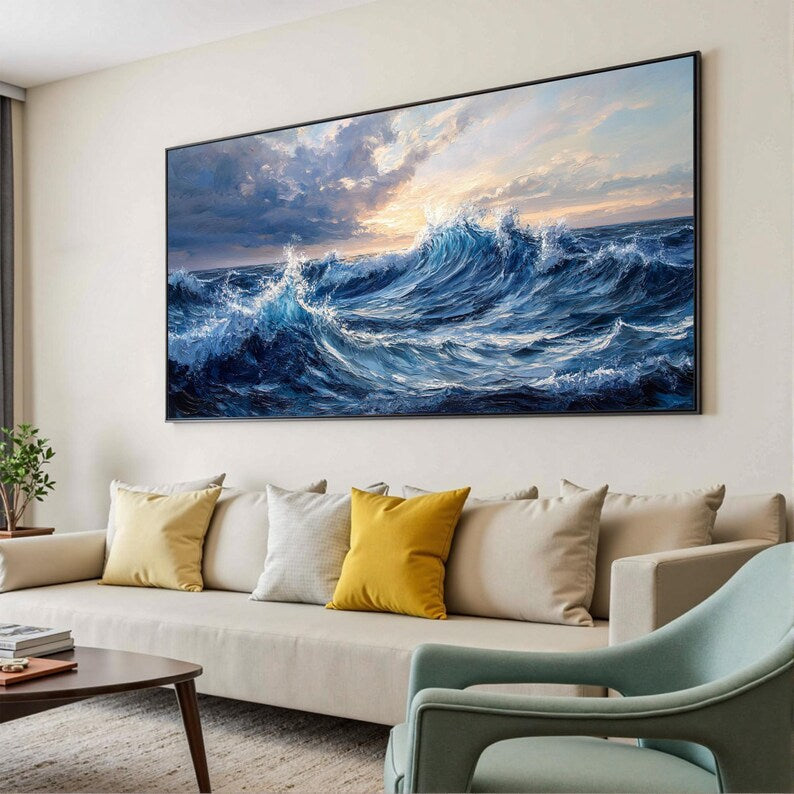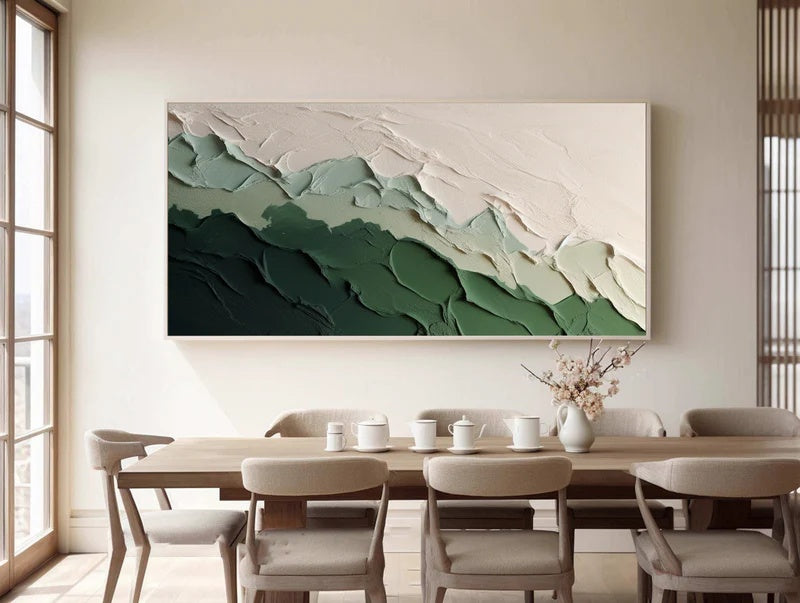


Flat, hard interiors reflect sound aggressively, which is why premium 3D canvas art is increasingly used to soften echo while preserving a refined aesthetic. For homeowners, designers, and loft residents dealing with glass, concrete, or high ceilings, these textured works can help scatter mid-to-high frequency reflections. They are not a substitute for full acoustic treatment, but they offer a visually integrated way to improve comfort.
In echo-prone spaces, the issue is rarely volume—it is reflection. Sound waves bounce between parallel surfaces, creating flutter echo and a sharp, lingering reverberation. This is where premium 3D canvas art moves beyond decoration. Its sculptural depth introduces irregular geometry that interrupts these reflections, shifting the acoustic character of a room without introducing technical-looking panels.
Why flat walls amplify echo in modern spaces
Minimalist architecture often prioritizes uninterrupted planes: plaster walls, glass partitions, polished concrete, and stone floors. While visually calm, these materials are acoustically unforgiving.
When sound hits a flat surface, it reflects at equal angles, maintaining energy and direction. In rooms with parallel walls, this leads to repetitive bouncing—what designers recognize as flutter echo. In dining areas or media rooms, this manifests as sharp speech reflections or a metallic “ring.”
High ceilings intensify the problem. The longer the sound path, the more time reflections have to decay, which increases perceived echo. Without surface variation, the room behaves almost like a hard shell.
How premium 3D canvas art disrupts sound reflections
Premium 3D canvas art works through surface complexity rather than soft absorption alone. Its value lies in diffusion.
Instead of reflecting sound uniformly, a heavily textured surface breaks incoming waves into multiple दिशions. The result is:
-
Reduced direct reflection intensity.
-
Scattered high-frequency energy.
-
Less perceptible echo sharpness.
-
Improved speech clarity in reflective rooms.
This is where heavy impasto noise reduction becomes relevant. Thick mineral ridges, carved channels, and layered relief forms act like micro-scale architectural features. Each protrusion alters the angle of reflection, preventing sound from bouncing cleanly across the room.
Unlike foam panels that absorb aggressively, these artworks strike a balance. They preserve liveliness while removing harshness—a key distinction in luxury residential environments where over-dampening can feel unnatural.
Material composition behind structural relief canvases
Not all textured art behaves acoustically the same. The performance depends heavily on material density and layering.
Structural plaster relief art blocks—commonly used in premium pieces—are built from mineral-based compounds applied in multiple layers. These materials offer:
-
Mass, which slightly reduces vibration at the surface level.
-
Micro-porosity, allowing limited absorption alongside diffusion.
-
Structural rigidity, maintaining long-term geometric integrity.
The substrate also matters. A stretched canvas over a wood frame creates a shallow cavity behind the surface. While not engineered as a full acoustic trap, this air gap can subtly influence how sound energy dissipates.
Artextured, an artist collective founded in Xiamen, developed its approach from a practical need to reduce echo within its own gallery space. That origin shows in how its works combine sculptural mineral layers with an understanding of spatial acoustics rather than purely visual texture.
Light, shadow, and perceived depth under interior lighting
The visual performance of 3D canvas art is inseparable from lighting design. The same relief surface can appear dramatically different depending on light angle and intensity.
Directional lighting—such as ceiling spots or track systems—creates elongated shadows across raised textures. This exaggerates depth, making the surface read as more architectural. Diffused lighting, by contrast, flattens perception and reduces visual contrast.
There is also a spatial consequence. Strong shadow lines can visually “break” large wall expanses, which indirectly influences how a room feels acoustically. Spaces that appear segmented often feel less echo-prone, even when the physical change is subtle.
A common oversight is placing heavily textured artwork under flat, overhead lighting. Without angled illumination, much of the sculptural detail—and its perceived value—is lost.
Placement strategies that actually influence room acoustics
Placement matters more than quantity in many cases. Randomly hanging textured artwork does little if key reflection zones remain untreated.
Focus on:
-
First reflection zones: Walls directly adjacent to seating areas or dining tables where sound first bounces.
-
Parallel wall interruption: Breaking symmetry between opposing surfaces reduces flutter echo.
-
Large uninterrupted spans: Long concrete or glass walls benefit most from textured intervention.
Scale is equally important. A small piece in a large, double-height space will not meaningfully affect acoustics. Wider compositions or grouped panels are more effective in altering reflection patterns.
To resolve architectural audio reflections without compromising on aesthetic purity, integrating premium 3D canvas art offers an elegant, multi-functional design solution.
Where 3D canvas art fits among acoustic solutions
It is important to position these artworks correctly within the broader acoustic toolkit.
They are best understood as:
-
A diffusion-forward surface with mild absorption.
-
Aesthetic alternatives to visible acoustic panels.
-
Enhancements for speech comfort and echo reduction.
They are not:
-
Soundproofing systems.
-
Barriers against external noise.
-
Replacements for full acoustic engineering in critical environments.
In media rooms or open-plan lofts, they work well alongside rugs, upholstered furniture, curtains, or concealed acoustic panels. This layered approach produces a more balanced acoustic environment.
Common mistakes and unrealistic expectations
Misapplication is the main reason users feel underwhelmed by acoustic art.
Typical issues include:
-
Expecting a single artwork to fix a large reverberant space.
-
Ignoring ceilings and floors, which often reflect as much sound as walls.
-
Installing pieces purely for symmetry rather than acoustic logic.
-
Placing them behind seating instead of at reflection points.
-
Sealing textured surfaces with glossy coatings, which reduces micro-absorption.
-
Overloading a room with too many absorptive elements, resulting in a dull, lifeless acoustic.
There is also a durability consideration. Deep, delicate textures may not suit high-traffic zones or humid environments without planning for maintenance.
The intersection of tactile aesthetics and spatial performance
Tactile abstract canvas aesthetics operate on two levels: visual and environmental. The same ridges and valleys that catch light also interact with sound.
This dual function is what makes premium 3D canvas art particularly relevant in contemporary interiors. Instead of treating acoustics as a technical afterthought, it becomes embedded within the visual language of the space.
For designers working in minimal or material-driven environments, this integration avoids the compromise between performance and purity. It allows walls to remain expressive while quietly correcting one of modern architecture’s most persistent flaws.
At the higher end of the spectrum, collections such as those developed by Artextured demonstrate how art can evolve into a spatial tool—one that reshapes not just what a room looks like, but how it feels to inhabit.
Frequently Asked Questions
How does premium 3D canvas art help reduce room echo and sound reflections?
It helps by scattering sound waves across uneven surfaces, reducing sharp reflections and softening echo. The layered textures break up direct الصوت paths, especially for mid-to-high frequencies, improving perceived clarity in reflective interiors.
Can heavy impasto paintings replace industrial acoustic foam panels?
No, they serve a different role. Heavy impasto works provide diffusion and light absorption, while foam panels are designed for stronger absorption. In many interiors, they complement each other rather than replace one another.
What materials are used to create structural 3D relief on professional art canvases?
They typically involve mineral-based plasters, binders, and layered compounds applied over a canvas or panel support. These materials create durable, sculptural surfaces with both density and micro-texture.
How do lighting angles alter the visual form of 3D tactile abstract paintings?
Angled lighting enhances shadows and emphasizes depth, making textures appear more dramatic. Flat lighting reduces contrast and can visually flatten the artwork, diminishing its spatial presence.
Is 3D wall sound scattering enough for large open-plan rooms?
Not on its own. It can improve comfort and reduce harsh reflections, but large spaces usually require a combination of treatments—such as soft furnishings, ceiling considerations, and strategic coverage—to achieve balanced acoustics.